Virtual Reality Table Layouts Redefining Player Risk Calculations in Blackjack Environments
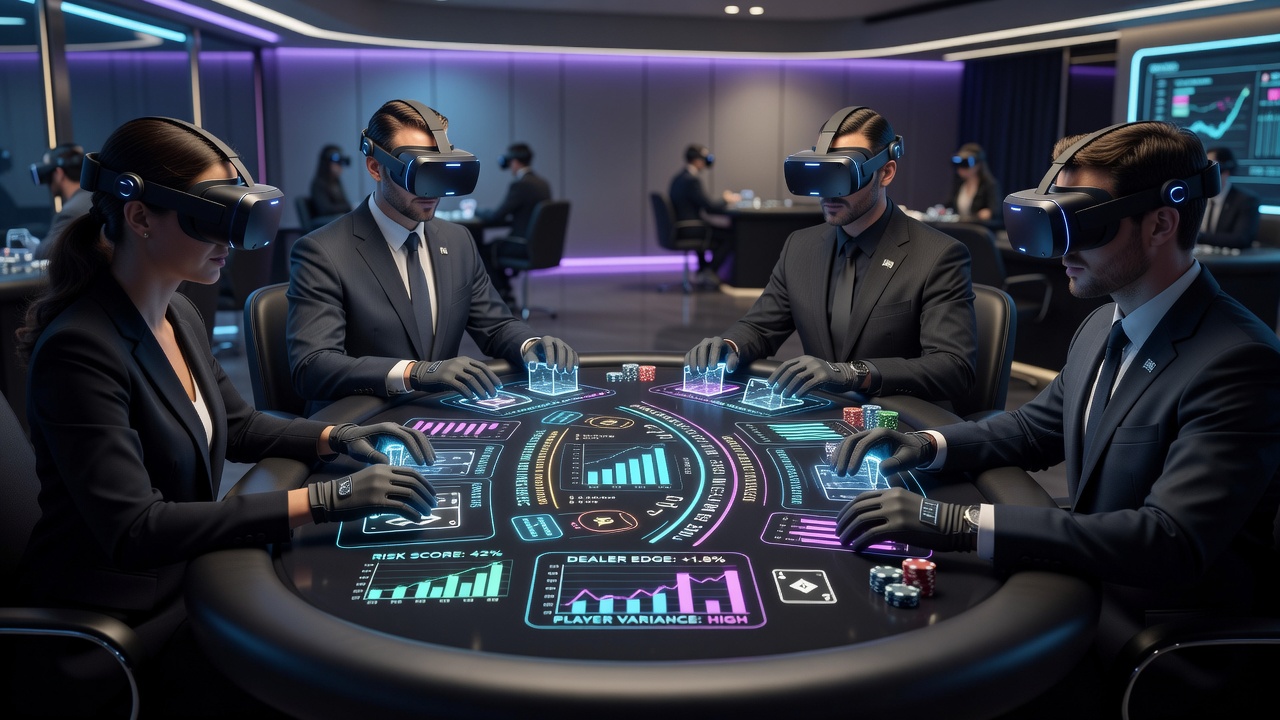
Virtual reality configurations have begun to alter how participants evaluate probabilities during live blackjack sessions, as integrated overlays and spatial arrangements provide immediate data streams that shift traditional assessment methods. Research from the International Gaming Institute at the University of Nevada, Las Vegas shows these setups combine physical dealer interactions with digital interfaces that highlight card distributions and payout structures in real time. Observers note that such designs allow players to process multiple variables simultaneously, which changes the pace at which decisions form around hit or stand choices.
Table layouts in these VR environments often feature modular grids that adjust based on session data, and this flexibility influences how risk gets measured against house edges across multi-deck formats. Studies indicate that when visual cues appear directly on the surface, participants adjust their strategies more frequently than in standard setups, especially when penetration rates vary. Data collected through mid-2025 deployments reveals correlations between these visual aids and altered betting patterns, with volumes rising in sessions where overlays emphasize remaining deck compositions.
Design Elements Driving Pattern Shifts
Engineers incorporate haptic feedback zones and layered projection systems into VR blackjack tables, creating environments where risk assessment incorporates both tactile and visual inputs at once. According to reports from the Nevada Gaming Control Board, these features emerged in pilot programs that tested player responses across different regional markets through early 2026. Participants encounter dynamic boundaries that expand or contract depending on current hand totals, and this mechanic prompts quicker recalibrations of expected values during play.
What's interesting is how these elements connect to broader session metrics, because longer multi-clause flows show that dealers maintain standard procedures while the VR layer supplies supplementary statistics without interrupting flow. One documented case from a tribal facility in the southwestern United States demonstrated that average decision times shortened by measurable margins once the overlays stabilized, leading to higher hand counts per hour. Researchers discovered that risk patterns evolved toward more conservative approaches when probability indicators appeared in peripheral vision fields rather than central displays.
Integration With Live Dealer Protocols
Live sessions maintain core rules while VR additions layer onto existing frameworks, so regulatory compliance stays consistent across jurisdictions that have approved the technology. Figures from the New Jersey Division of Gaming Enforcement highlight steady adoption rates in hybrid formats that blend remote participation with on-site verification processes. And this integration matters because it allows operators to track how spatial arrangements affect wager sizing without altering payout percentages.

By July 2026, several properties had rolled out updated versions that refined calibration for multi-player synchronization, and these updates addressed latency issues that previously disrupted assessment continuity. People who've studied the deployments observe that synchronized data streams help maintain consistent risk evaluations even when table occupancy fluctuates. The reality is that these systems draw from established probability models yet present them through interfaces that adapt to individual session histories collected over time.
Regional Variations and Data Trends
Markets in Canada adn parts of Europe have tested comparable VR table prototypes with localized adjustments for regulatory frameworks, and preliminary results point to distinct shifts in how players weigh side bet options against base game risks. Industry reports compiled by the Canadian Gaming Association detail that variance in assessment patterns appears most pronounced during peak evening hours when visual complexity increases. Those who've examined the datasets note connections between table geometry and reduced frequency of high-variance plays, because spatial cues guide attention toward lower-risk sequences more effectively.
Academic papers presented at gaming technology conferences throughout 2025 and into 2026 further explore these dynamics, showing that immersion depth correlates with sustained attention spans during extended sessions. Experts have observed that when table designs incorporate adaptive lighting tied to deck remaining percentages, participants demonstrate steadier progression through betting cycles. This pattern holds across different stake levels, suggesting the influence operates independently of bankroll size in controlled environments.
Conclusion
Virtual reality table designs continue to evolve in ways that reshape risk assessment during live blackjack, with evidence accumulating from operational data across multiple continents. Regulatory bodies and research institutions track these developments closely, providing ongoing measurements that clarify how spatial and digital elements interact with established play protocols. The available information indicates sustained interest in refining these configurations to align with existing session performance standards.