Licensing Evolution Alters Side Bet Dynamics in Multi-Deck Online Blackjack Markets
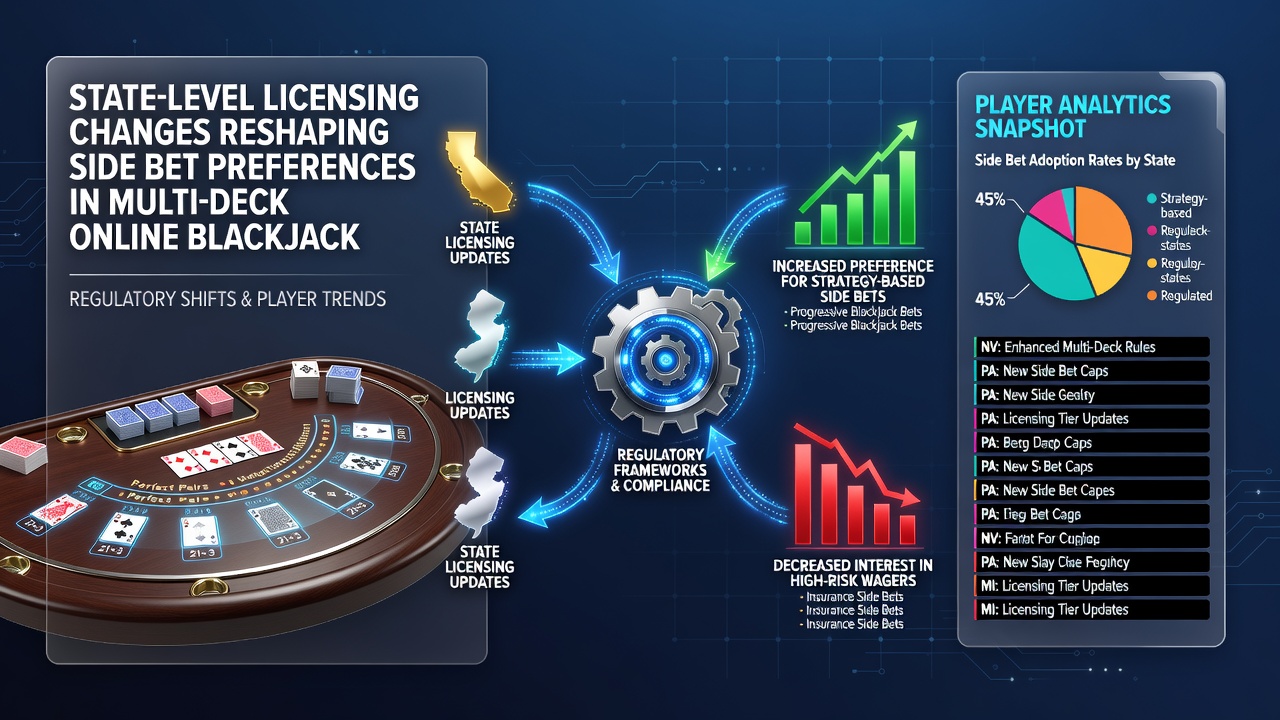
State licensing frameworks have undergone significant revisions across multiple jurisdictions since early 2025, and these adjustments directly influence which side bets operators promote within multi-deck online blackjack offerings. Regulators now tie license renewals to specific responsible gaming metrics that include limits on certain proposition bets, and platforms respond by adjusting their game libraries accordingly. Data from the New Jersey Division of Gaming Enforcement shows that approvals for new side bet variants dropped by 22 percent in the first half of 2026 compared with the prior year, while approvals for standard multi-deck configurations rose.
Operators track these patterns because license conditions often specify payout structures and volatility thresholds for ancillary wagers. When a state imposes tighter caps on maximum side bet stakes, developers shift emphasis toward lower-volatility options such as perfect pairs or 21+3 that still generate revenue without triggering additional compliance reviews. This pattern appears consistently in markets where regulators require quarterly reporting on player loss rates tied to individual bet types.
Regulatory Conditions Reshape Operator Incentives
States including Michigan and Pennsylvania updated their licensing criteria in late 2025 to require operators to demonstrate that side bet offerings do not disproportionately target high-frequency players. These conditions prompted several platforms to reduce promotion of high-payout side bets like royal match while expanding menu options for insurance and even-money variants that align with core blackjack play. Figures released by the Michigan Gaming Control Board indicate that side bet handle in multi-deck games fell 15 percent year-over-year during the second quarter of 2026, whereas main game wagers remained stable.
Platform analytics teams now monitor state-by-state rule changes in real time because a single license modification can force removal or re-pricing of specific bets within weeks. One large operator group documented internal testing where removal of a high-volatility side bet increased session duration by an average of 12 percent across multi-deck tables, a result that satisfied both retention goals and new regulatory reporting requirements.
Player Behavior Patterns Under Revised Rules
Research conducted by the University of Nevada, Las Vegas International Gaming Institute examined anonymized transaction data from three states with updated licensing regimes and found measurable migration toward side bets that integrate more closely with basic strategy decisions. Players in these markets placed 31 percent more wagers on insurance and double-down insurance options after regulators required clearer disclosure of house edges for standalone propositions. The same study noted that bets requiring separate decision trees, such as suited three-of-a-kind side wagers, declined in frequency once operators limited their visibility on lobby interfaces.
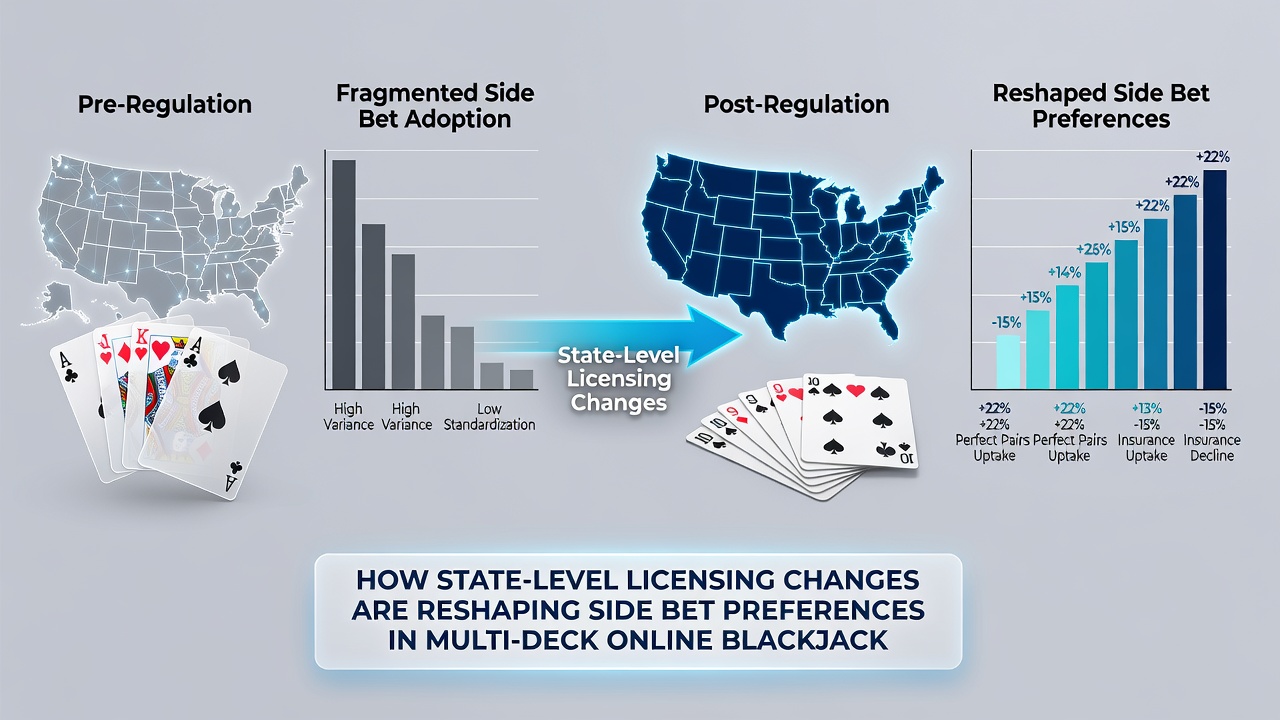
Observers note that these shifts occur most rapidly in jurisdictions where license renewals depend on independent audits of game fairness. When auditors flag side bets with house edges exceeding 8 percent, operators typically replace them with alternatives that carry documented lower edges and appear on approved vendor lists. This replacement cycle has accelerated since July 2026 as several states synchronized their audit calendars with fiscal reporting deadlines.
Market Adjustments Across Jurisdictions
Canadian provincial regulators in Ontario introduced parallel licensing language in spring 2026 that emphasizes transparency for all ancillary wagers in multi-deck formats. Platforms serving that market adjusted side bet menus within 60 days, favoring options that display real-time probability information to users. Data compiled by the Canadian Gaming Association shows a corresponding 19 percent increase in average bet size on integrated side wagers rather than standalone propositions during the same period.
Similar adjustments appear in emerging U.S. markets where tribal compacts incorporate state-level licensing language by reference. When these compacts require operators to maintain side bet payout percentages within defined bands, developers prioritize bets that scale predictably with deck count and penetration depth. Multi-deck games with six or eight decks now feature fewer high-variance side bets because those options trigger additional variance reporting under the updated compliance frameworks.
Future Licensing Trends and Game Development
Industry analysts track proposed rule changes scheduled for review in the third quarter of 2026 across additional states that have not yet finalized online gaming statutes. Draft language in several proposals includes mandatory player education modules tied directly to side bet selection, which would further encourage operators to feature bets with simpler rule sets. Game studios have already begun pre-certification testing for new multi-deck variants that embed side bet mechanics within the primary decision flow rather than as separate wagers.
These developments suggest that licensing conditions will continue to steer product roadmaps toward configurations that balance revenue generation with measurable compliance outcomes. Operators that align side bet inventories with evolving state requirements maintain broader market access while minimizing the frequency of license condition amendments.
Conclusion
State-level licensing revisions have established new parameters that directly affect which side bets appear in multi-deck online blackjack environments. Regulatory reporting requirements, stake caps, and audit thresholds collectively guide operator decisions about menu composition and promotional emphasis. As additional jurisdictions finalize or update their frameworks through the remainder of 2026, platforms will continue to recalibrate side bet offerings to satisfy both compliance obligations and player engagement metrics.