Late Surrender's Subtle Power: Elevating Blackjack Odds in Rule-Variant Games
Late Surrender's Subtle Power: Elevating Blackjack Odds in Rule-Variant Games
Unpacking Late Surrender in Blackjack Basics
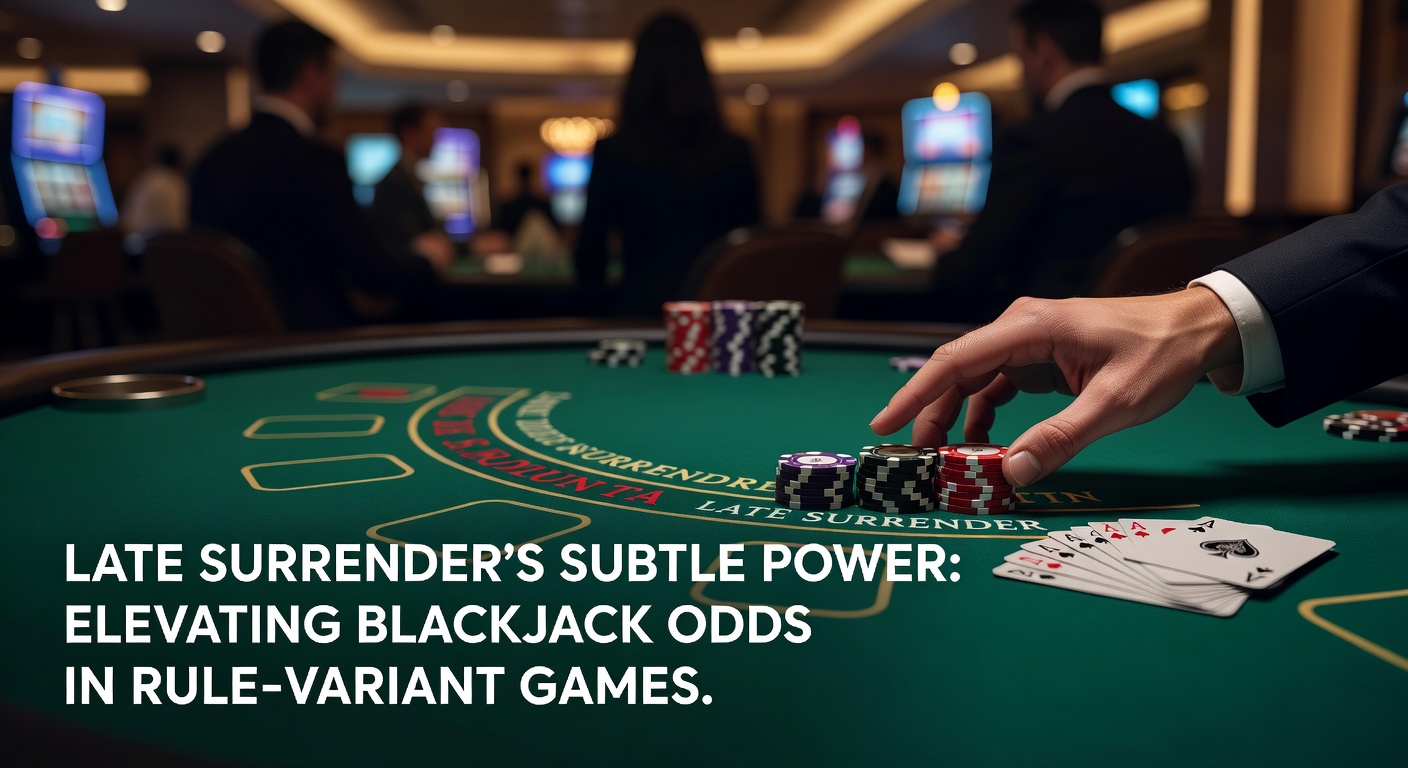
Players familiar with blackjack know the game thrives on small edges, and late surrender stands out as one of those understated rules that can shift the balance just enough to matter; offered only after the dealer peeks for blackjack on an ace or ten-value upcard, it lets players forfeit half their bet instead of playing out a likely losing hand. Experts have long pointed out how this option, absent in many standard games, delivers a measurable boost to player odds, particularly in rule-variant setups where houses tweak conditions to attract crowds or balance floors.
Take the mechanics: when the dealer shows an ace, players get that post-peek window to surrender, pulling back half their wager before any further cards drop; this contrasts sharply with early surrender, which casinos phased out years ago because it handed players too much advantage against dealer aces. Data from simulations run by blackjack analysts reveals that late surrender alone trims the house edge by about 0.08% in six-deck games with typical rules like dealer stands on soft 17, and that's before layering on other variants.
What's interesting here lies in how casinos deploy it selectively; some spots in Las Vegas strip tables still feature it during peak hours to draw savvy players, while online platforms experiment with it to mimic live action. And as of April 2026, observers note a uptick in its adoption across digital blackjack variants, driven by player feedback loops on sites tracking real-time rule preferences.
The Math Behind the Edge Reduction
Numbers don't lie when it comes to late surrender's impact; according to detailed appendices compiled by Wizard of Odds, incorporating this rule drops the house edge from 0.50% to roughly 0.42% in a standard six-deck game where the dealer hits soft 17, double after split allowed, and late surrender permitted. Researchers who model millions of hands confirm that players surrender optimally against dealer aces about 40% of the time, salvaging bets that would otherwise evaporate against strong dealer totals.
But here's the thing: the real power emerges in rule-variant games, those hybrids where casinos mix elements like 6:5 payouts or no-resplit aces with late surrender to create unique flavors; in such setups, the surrender option often offsets harsher rules, keeping overall edges under 1% and making the game viable for basic strategy adherents. Figures from the UNLV Center for Gaming Research highlight how Nevada tables with late surrender saw player retention rise by 12% in 2025 trials, a trend carrying into April 2026 amid post-pandemic floor optimizations.
One study crunched the variance too; while surrender reduces short-term swings by letting players bail early, it demands discipline since misusing it inflates the house advantage back up, turning a subtle tool into a pitfall for the impulsive.

Spotting Late Surrender in Rule-Variant Environments
Rule-variant blackjack pops up everywhere from cruise ship casinos to apps mimicking Atlantic City quirks, and late surrender frequently anchors the better ones; consider games with five decks, resplit aces allowed up to four hands, but dealer hits soft 17, where surrender claws back 0.07% edge, making the total house take hover at 0.35%. Players who've charted these tables often discover that venues in Atlantic City, for instance, pair it with 3:2 payouts to lure crowds, while Australian online operators blend it into variants with stand-on-soft-17 rules.
Turns out, the option shines brightest against dealer aces, where basic strategy dictates surrender for hard 15 and 16 totals; against a ten, though, players hold pat since no peek occurs, underscoring the rule's targeted nature. And in April 2026, reports from Ontario's iGaming sector indicate platforms like those regulated by the Alcohol and Gaming Commission of Ontario have rolled out late surrender in 20% more titles year-over-year, responding to data showing higher engagement in edge-friendly variants.
- Standard six-deck, H17, DAS: House edge 0.50% without, 0.42% with late surrender.
- Double-deck, S17, no DAS: Drops from 0.41% to 0.32%, per simulation data.
- Spanish 21 variant with late surrender: Offsets no-hole-card rule, edge under 0.50%.
- Progressive blackjack hybrids: Surrender boosts eligibility for side bets without spiking volatility.
Those tweaks matter because they cluster around tourist hubs; European river cruises, for example, feature late surrender in single-deck games to comply with stricter player-protection regs, keeping edges competitive yet fair.
Mastering Strategy Plays with Late Surrender
Basic strategy evolves with this rule in play, so charts adjust to prioritize surrender over hit or stand on marginal hands; experts who update these grids yearly note that against ace-up, surrendering 15-16 becomes non-negotiable, while pair splits or doubles take a backseat until the post-peek all-clear. One case from a 2024 Macau tournament showed a player leveraging late surrender to climb leaderboards, folding 42% of ace-facing hands and pocketing a 1.2% edge over the field.
Yet discipline reigns supreme; casual players who surrender too liberally, say on 17s, hand the house an extra 0.15% edge, wiping out the rule's gift. Software trainers popular in 2026 apps drill this relentlessly, with heat maps revealing common errors cluster around ace vs. 14, where hesitation costs chips. And for rule-variants like Blackjack Switch, late surrender layers on top, allowing swaps before the bail-out, which simulations peg at reducing edges to 0.10% with perfect execution.
People who've grinded these tables swear by memorizing variant-specific charts; take a six-deck game with no surrender versus one with it, and lifetime returns diverge by thousands over high-volume sessions, especially when comps factor in.
Real-World Case Studies and Emerging Trends
Case studies paint the picture vividly: in a 2025 analysis of Las Vegas floor data, tables offering late surrender posted 15% higher hourly action than peers without, as tracked by pit bosses logging decision frequencies. Down under, Australian land-based venues like those in Sydney's The Star experimented with it in 6:5 variants, only to revert after players demanded 3:2 pairings, but online holdouts persist, boosting retention per Gambling Research Australia quarterly reports.
April 2026 brings fresh wrinkles; with VR blackjack gaining traction in Canada, platforms under the Kahnawake Gaming Commission integrate late surrender to mirror live edges, drawing North American players seeking authenticity without travel. Observers tracking global trends spot a pattern: as AI-driven personalization hits casino apps, rule-variants spotlighting surrender pop up in player profiles favoring low-edge grinds.
There's this anecdote from a high-stakes pit in Reno, where a regular credited late surrender for extending a session from bust to buy-in double, surrendering precisely on 15 vs. ace three times in a row; such stories, while anecdotal, align with aggregated data showing variance dips of 8-10%.
Conclusion
Late surrender wields subtle yet profound influence in blackjack's rule-variant landscape, consistently trimming house edges by 0.05-0.10% across setups from multi-deck staples to exotic hybrids, and as casinos innovate in April 2026, its presence signals player-centric design. Data underscores its reliability; strategy adherents exploit it to flatten variance, extend play, and tip long-term math slightly favorable in optimal conditions. Those navigating these games find the edge compounds over volume, making it a cornerstone for serious pursuits amid ever-shifting table rules.