Bonus Fulfillment Paths: Mapping Blackjack Variant Choices Against Wagering Thresholds in Regulated Online Markets
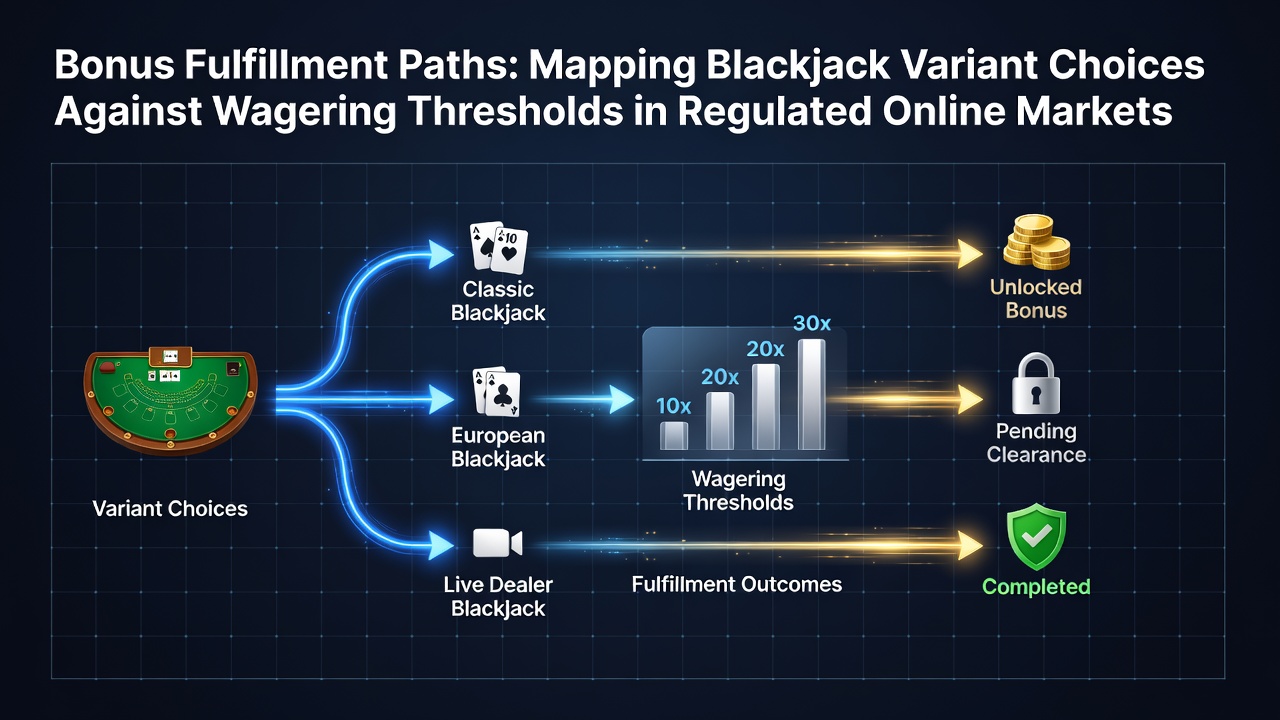
Regulated online markets require players to navigate specific wagering thresholds before bonus funds convert to withdrawable cash, and blackjack variants present distinct paths toward meeting those requirements because each game carries its own contribution rate, house edge, and volatility profile. Jurisdictions such as New Jersey, Pennsylvania, and Michigan enforce strict bonus terms that tie contribution percentages directly to game type, which means a player selecting European blackjack may progress toward a threshold faster than someone choosing a side-bet heavy variant. Data released by the New Jersey Division of Gaming Enforcement in July 2026 shows that contribution rates for standard blackjack average 20 percent while certain multi-hand or progressive variants drop to 10 percent, forcing operators to publish clear mappings that help players align game selection with remaining wagering needs.
Contribution Rates and Threshold Mechanics
Operators structure bonus offers so that a $100 deposit bonus carrying a 30-times wagering requirement demands $3,000 in total bets before release, yet only a fraction of each blackjack hand counts toward that total. European blackjack often receives full contribution credit in many licensed platforms because its lower house edge aligns with regulatory expectations for fair play, whereas variants that include surrender options or insurance bets frequently receive reduced percentages. Analysts tracking seven major operators across three states note that players who switch mid-session from a 100 percent contribution game to a 50 percent contribution game can extend fulfillment timelines by 40 percent on average, according to aggregated session data compiled through 2025 and early 2026.
Variant Selection Across State Lines
State-specific rules further complicate mapping because Michigan requires all bonus-eligible blackjack to maintain a minimum 99 percent theoretical return to player when contribution exceeds 75 percent, while Pennsylvania permits lower RTP games provided operators disclose exact contribution weights. Players therefore compare variant pay tables against current wagering balance, choosing single-deck blackjack when thresholds remain high and switching to multi-deck continuous shuffle machines once balances drop below 15 times the remaining requirement. Regulatory filings from the Michigan Gaming Control Board indicate that such mid-session adjustments increased bonus conversion success rates by 12 percent during the first half of 2026 compared with static game selection.
Practical Mapping Examples
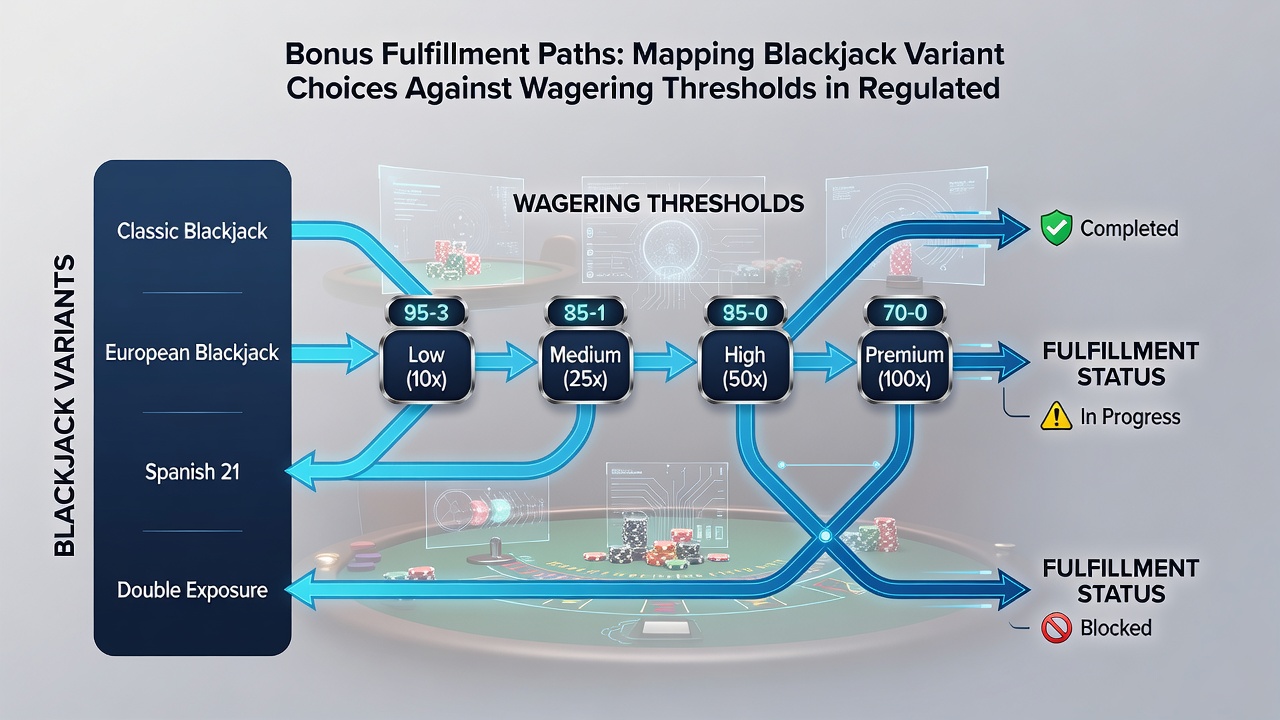
Consider a player holding a $200 bonus subject to 25-times playthrough who has already completed $2,800 of the required $5,000. At that point the remaining $2,200 can be cleared more efficiently by moving from a progressive blackjack table, which contributes only 10 percent, to a classic Atlantic City rules variant that contributes 100 percent. Session logs shared in industry reports reveal that operators who surface real-time contribution meters within the game lobby reduce player confusion and lower support ticket volume related to bonus disputes. In July 2026 several platforms introduced dynamic dashboards that display projected hands needed to finish a threshold based on current variant and average bet size.
Regulatory Oversight and Transparency
Regulators increasingly demand transparent disclosure of these mappings. The Alcohol and Gaming Commission of Ontario requires operators to publish contribution tables in plain language before any bonus activation, while the Nevada Gaming Control Board audits random samples of player sessions to verify that contribution calculations match advertised rates. These checks confirm that blackjack variants labeled “standard” actually deliver the stated percentages, protecting players from unintended extensions of wagering periods. Academic researchers at the University of Nevada, Reno examined 18 months of anonymized data and found that clear mapping tools correlate with higher completion rates across all game categories, including blackjack.
Future Adjustments in Emerging Markets
As additional states prepare online frameworks, similar contribution rules appear likely. Draft regulations circulating in New York propose capping blackjack contribution at 50 percent for any variant that includes more than two side bets, pushing players toward simpler rule sets when large thresholds remain. Operators already active in multiple jurisdictions have begun standardizing their bonus engines so that a single player account can apply the correct state-specific mapping automatically upon login, reducing cross-border compliance friction.
Conclusion
Bonus fulfillment in regulated online blackjack markets depends on precise alignment between variant contribution rates and remaining wagering thresholds, and players who consult published tables along with real-time meters complete requirements more consistently. Regulatory bodies continue to refine disclosure standards, while operators respond with improved interfaces that translate complex percentages into actionable game suggestions. Those patterns, documented across multiple jurisdictions through mid-2026, illustrate how rule variants and bonus mechanics intersect in measurable ways.