Blackjack's Cultural Pathways: Exchanges Driving Tribal Gaming Growth
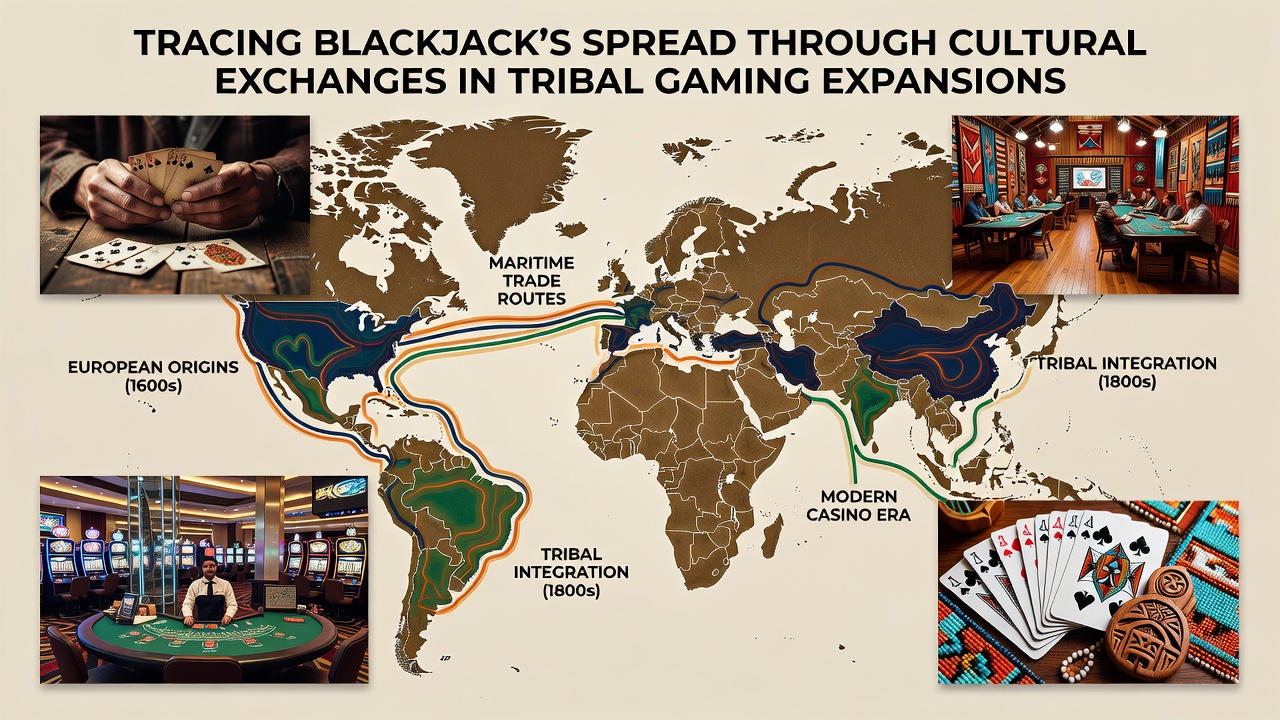
Blackjack reached North American shores through French and Spanish colonial routes in the 1700s, where traders carried the game known as vingt-et-un across oceans and into frontier settlements, and indigenous communities encountered these card traditions during periods of trade and territorial negotiation. Those early interactions laid groundwork for later adaptations as European settlers expanded westward, carrying rules and variations that blended with local customs over generations.
By the 19th century observers documented blackjack tables appearing in riverboat gambling circuits along the Mississippi, while frontier outposts served as meeting points where diverse populations exchanged both goods and recreational practices. Research from university archives shows how these contact zones facilitated incremental rule modifications, such as adjustments to dealer hit requirements that reflected regional preferences rather than strict adherence to original French formats.
Colonial Trade Networks and Early Adaptations
European maritime routes connected ports from the Caribbean to the Gulf Coast, allowing blackjack to migrate alongside other card games like faro and poker, and records from the Louisiana Purchase era indicate mixed cultural gatherings where participants shared strategies across language barriers. Historians note that these exchanges occurred in markets and taverns where Native traders interacted with settlers, creating informal learning environments that transmitted basic gameplay mechanics without formal instruction.
Data from early 20th-century ethnographies reveals blackjack's presence in some reservation communities by the 1920s, often through contact with traveling merchants or military personnel stationed nearby. These instances remained limited until broader legal frameworks emerged, yet they established precedents for gaming as a shared activity across cultural lines.
Modern Tribal Gaming Expansion Under IGRA
The Indian Gaming Regulatory Act of 1988 marked a turning point by classifying games into categories and authorizing tribes to operate Class III offerings such as blackjack under compacts with states, and figures from the National Indian Gaming Commission show tribal gaming revenues growing from roughly $2 billion in 1995 to over $40 billion by 2025. This expansion coincided with renewed cultural exchanges as tribes collaborated on training programs, shared dealer certification standards, and adapted blackjack variants to fit community values.
Inter-tribal conferences organized by groups like the National Indian Gaming Association facilitated knowledge transfer regarding game management, security protocols, and customer engagement techniques, while exchanges with international operators introduced electronic blackjack terminals that maintained traditional card elements alongside digital interfaces. In July 2026 several Midwest tribes reported pilot programs testing hybrid tables that combined live dealing with automated shuffling devices developed through partnerships with Canadian suppliers.
Regional Variations and Cross-Border Influences
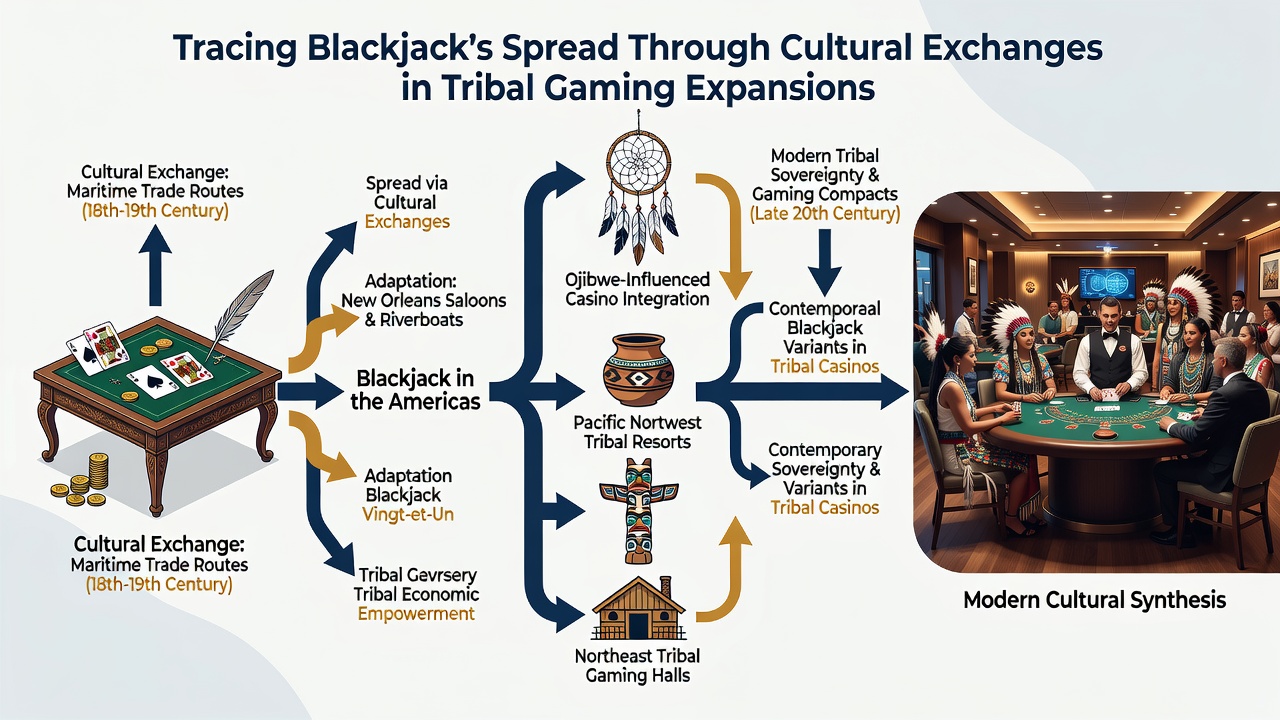
Tribal properties in California and Oklahoma incorporated blackjack rule sets influenced by both state regulations and tribal sovereignty considerations, resulting in options like multiple deck shoes and continuous shuffling machines that differ from Atlantic City standards. Academic studies conducted at institutions in the Southwest document how these adaptations emerged from dialogues between tribal gaming commissions and equipment manufacturers, blending efficiency needs with cultural preferences for faster play cycles.
Cross-border exchanges with Canadian First Nations operators introduced elements such as progressive jackpot side bets that spread southward through industry trade shows, whereas Australian gaming research papers highlight parallel developments in indigenous community gaming models that influenced some U.S. tribal marketing approaches. Observers note that these international connections accelerated after 2010 when online platform trials prompted discussions about standardized training across jurisdictions.
Regulatory Compacts and Knowledge Sharing
State-tribal compacts negotiated throughout the 1990s and 2000s often included provisions for technical assistance and regulatory alignment that encouraged the exchange of best practices for blackjack operations, and reports indicate over 500 such compacts now govern gaming across 29 states. These agreements created channels for joint seminars where tribal regulators reviewed card counting countermeasures alongside banking procedures borrowed from Nevada frameworks.
By the mid-2020s collaborative efforts expanded to include data analytics partnerships with European research groups studying probability models, which tribes adapted for internal auditing purposes. Such exchanges reinforced blackjack's role as a core offering while allowing customization that respected local governance structures.
Conclusion
Tracing blackjack through successive layers of cultural contact reveals a game shaped by trade routes, colonial encounters, and contemporary intergovernmental agreements that continue to evolve within tribal gaming contexts. Data from regulatory bodies and academic sources underscores how these exchanges sustain both economic activity and shared recreational traditions across diverse populations.